
Born Too Early for AI
We Survived Carbon Paper, Dial-Up Internet, and Windows 95. Now Our Grandchildren Are Teaching Us How to Talk to Machines.
My First Encounter With AI
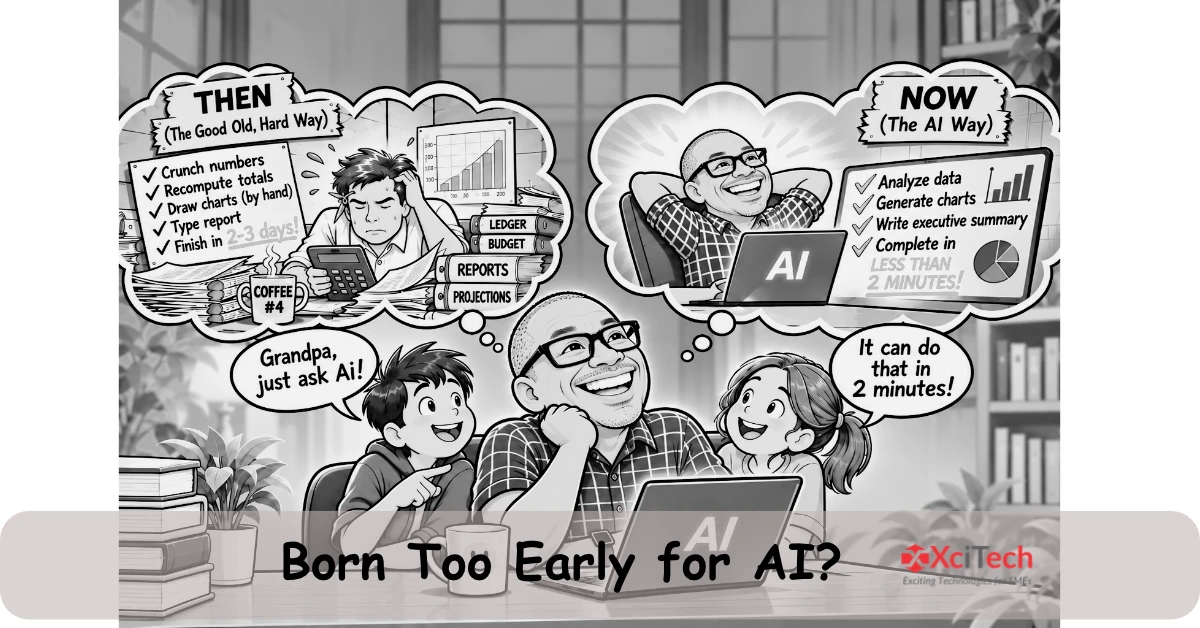
I recently asked AI to prepare a business report that would have taken me two or three days to complete during my younger years. I uploaded the data, typed a few instructions, and waited.
The Days When Computing Actually Required Work
>Back To Top Of Page>
When Your Grandchild Becomes Your IT Consultant
You ask your grandchild how to remove the background from a photograph. "Just use AI, Grandpa."
You ask how to make a video presentation. "There's an app for that."
You ask how to translate a document into another language. "Just upload it."
Meanwhile, you are still trying to remember which password you used.
The younger generation grew up swiping screens before they could properly spell the word "computer." For them, technology is not something to learn. It is simply part of everyday life.
For many Baby Boomers and Gen Xers, however, every technological advancement comes with a new learning curve. We learned DOS commands. Then Windows. Then the internet. Then email. Then social media. Then smartphones. Then cloud computing. And now, AI.
Now we must learn how to write prompts so that an artificial intelligence system understands what we want.
We used to complain that computers did not understand us. Now computers understand us so well that we sometimes wonder whether they know too much.
>Back To Top Of Page>
The Problem Is Not Age, It's The Speed Of Change
Older generations are not necessarily less capable of learning technology. Many of us built, managed, financed, and introduced the very technologies that younger generations now enjoy.
The difficulty is that technological change has accelerated beyond anything we experienced during our working lives.
In the past, a major technology could remain relevant for ten or twenty years. Today, you can attend an AI seminar in January and discover by June that half the presentation is already outdated.
By November, the software has acquired new features, changed its interface, and introduced an AI agent that can supposedly do your job while you sleep.
Unfortunately, it still cannot find your reading glasses. (My grandchild said the smartwatch his Daddy gifted me last Christmas can find my phone. But what good is that if I can't read anything?)
There is also the issue of confidence. Many older adults hesitate to explore new technology because they are afraid of making mistakes, losing information, or accidentally pressing something that costs money. The younger generation, on the other hand, tends to experiment first and worry later.
Perhaps we should borrow a little of that adventurous spirit, although preferably without clicking suspicious links promising free vacations.
Five Ways To Make AI Technology Work For Us
Instead of trying to master every new application, perhaps the better approach is to focus on technologies that make our lives easier, healthier, more productive, and more meaningful.
1. Make AI Your Personal Research Assistant
The important thing is to treat AI as a helpful assistant, not an infallible expert. Verify important facts, especially when money, health, or legal matters are involved.
2. Let Technology Help You Stay Healthy
3. Make Everyday Errands Less Exhausting
Digital banking can reduce unnecessary trips to the bank, while online government services can sometimes spare us from standing in long queues. The challenge is learning to use these services safely. Start with reputable applications, activate security features, and never share passwords or one-time verification codes. Convenience is wonderful, but financial security is even better.
4. Keep Learning Without Going Back to School
5. Reconnect, Create, and Leave Something Meaningful Behind
>Back To Top Of Page>
The Best Years May Still Be Ahead
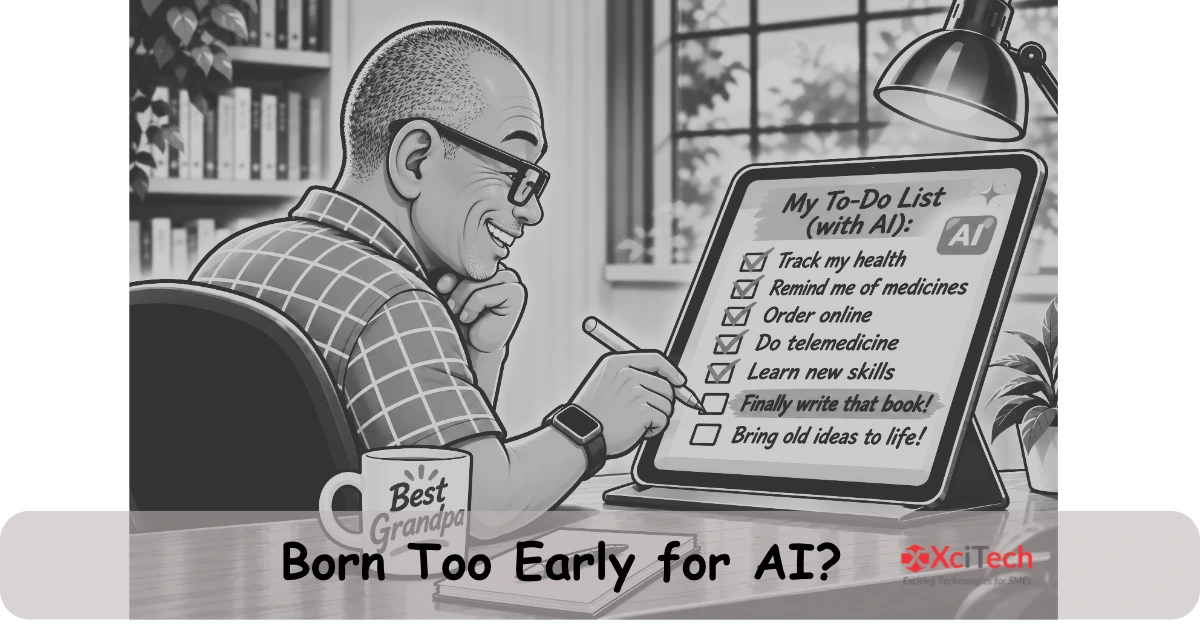
Experience.
Who says old dogs cannot learn new tricks? Especially when the new trick is teaching a computer to do the fetching.
- XEM